

A Place at the Table
The Gathering Named 2026 Small Nonprofit of the Year
Born from an Episcopal meal ministry in downtown Milwaukee, The Gathering of Southeast Wisconsin now serves nearly 130,000 meals a year—without losing sight of the dignity of each person who comes through the door.
In 1982, a small group opened the doors of St. James’ Episcopal Church in downtown Milwaukee and served a Saturday lunch. The idea was simple: people who were hungry should be able to receive a good meal without first having to prove that they deserved one.
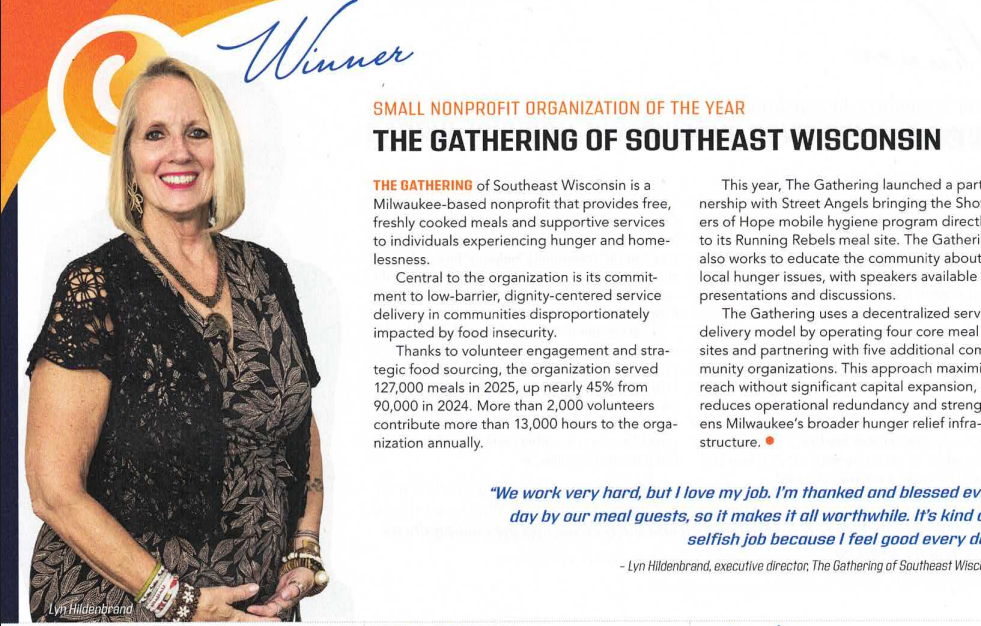
The BizTimes Award Article
More than four decades later, that ministry has become The Gathering of Southeast Wisconsin, one of the region’s largest volunteer-driven meal programs. This summer, BizTimes Media named The Gathering its 2026 Small Nonprofit Organization of the Year, recognizing both the scale of its work and the community-centered way it is carried out.
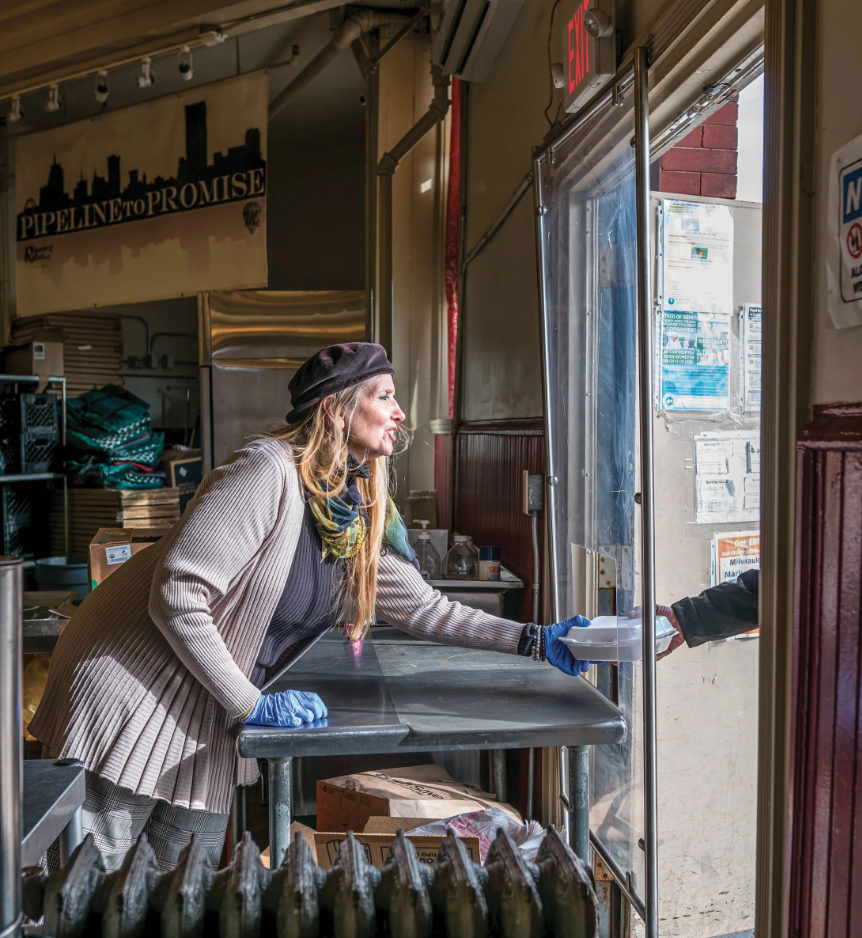
For the Episcopal Diocese of Wisconsin, the award also offers an occasion to celebrate a ministry with deep roots in our shared diocesan story.
The Gathering began as a ministry of the former Episcopal Diocese of Milwaukee at St. James’. It later became an independent nonprofit, widening its circle of partners while carrying forward the commitment that shaped its first meal: hospitality without barriers and service grounded in dignity. Its administrative office remains on the All Saints’ Cathedral campus in Milwaukee, where Executive Director Lyn Hildenbrand works alongside diocesan staff and other ministries.
“Everyone deserves a place at the table” is how The Gathering describes the belief at the heart of its work. That table has grown considerably.
In 2025, The Gathering served nearly 130,000 freshly prepared meals and bag lunches across Milwaukee—an increase of about 45 percent from the previous year. Four core meal sites now provide breakfast, lunch, or dinner seven days a week, 51 weeks a year. The organization also supplies meals through five community partners serving people affected by homelessness, domestic violence, involvement in the criminal justice system, and sexual exploitation.
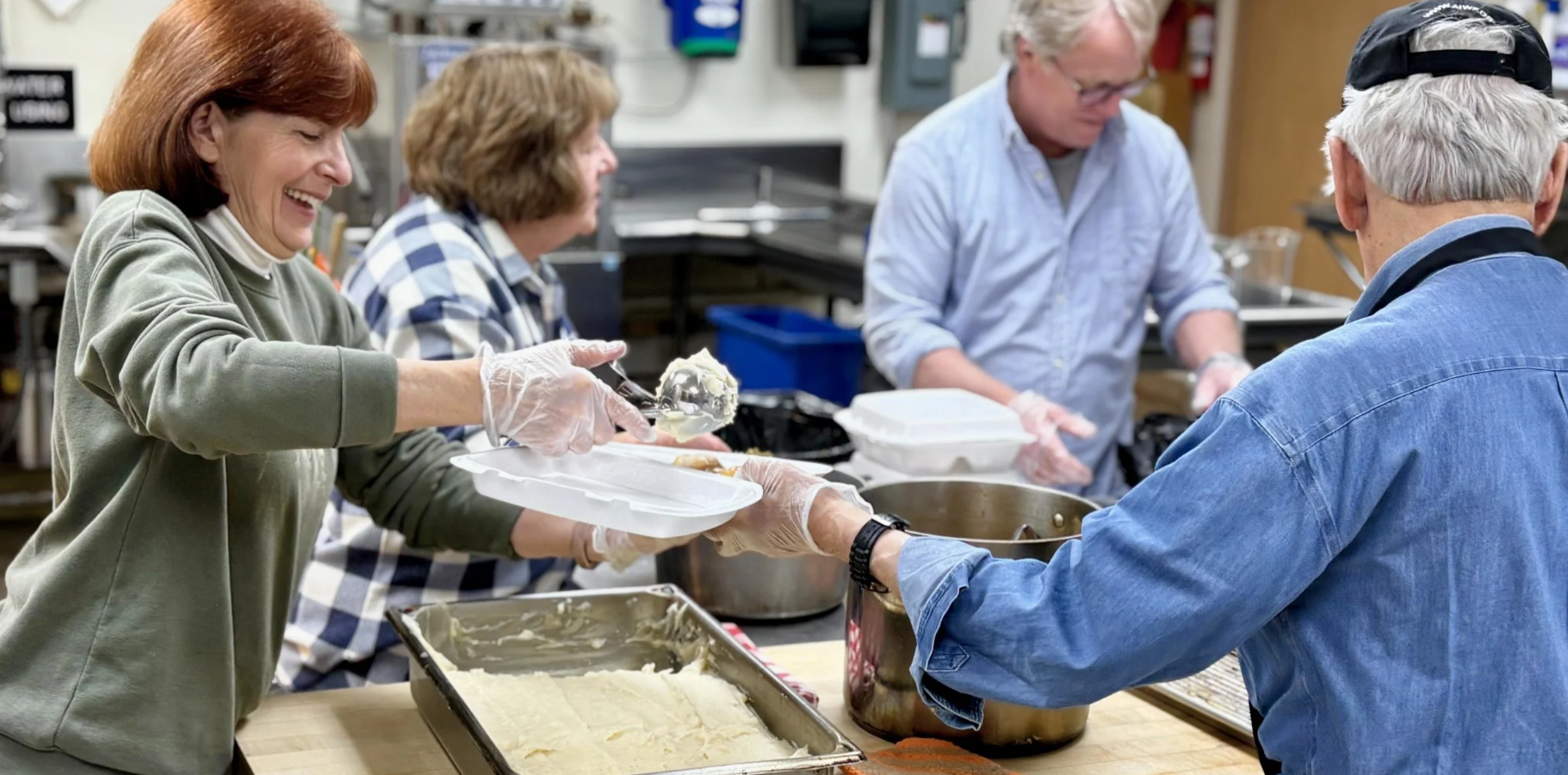
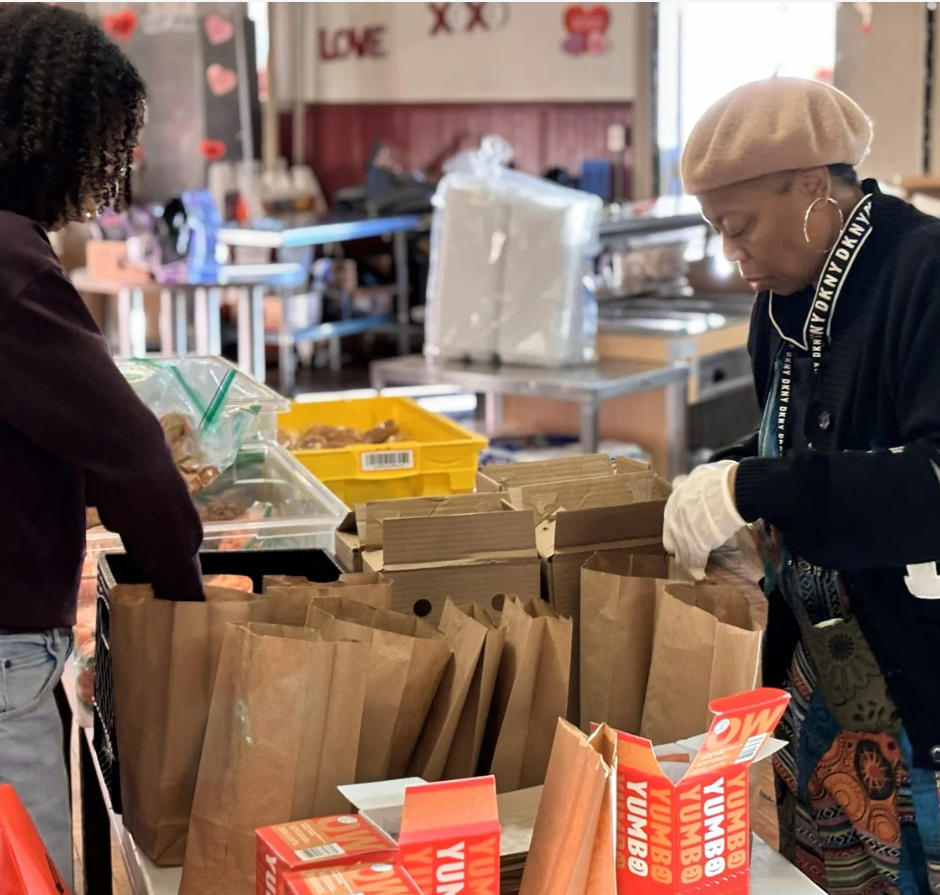
The numbers are striking, but they do not fully describe the ministry. Guests are welcomed without an intake process. Meals are prepared fresh. Volunteers do much of the cooking, serving, cleaning, food rescue, and hospitality. The Gathering estimates that more than 2,000 volunteers contributed over 13,000 hours in 2025, providing the overwhelming majority of its direct-service work.
This combination of broad volunteer participation and carefully built partnerships allows a relatively small organization to reach far beyond a single dining room. The Gathering works with Hunger Task Force, Feeding America Eastern Wisconsin, farmers markets, congregations, businesses, and other local organizations to source food, reduce waste, and bring meals to people where they already are.
Its four meal sites are located at Ascension Lutheran Church, Running Rebels Community Organization, Mt. Carmel Lutheran Church, and Redeemer Lutheran Church’s Lunch at Olga’s program. Beyond those sites, The Gathering provides regular meals to Sojourner Family Peace Center, Cathedral Center, Benedict Center, Franciscan Peacemakers, and Running Rebels. A partnership with Street Angels also brings the Shower of Hope mobile hygiene program directly to the Running Rebels site, connecting guests with another basic need in the same welcoming setting.
The model has changed repeatedly as Milwaukee’s needs have changed. The original Saturday lunch grew into weekday breakfasts, dinners, additional neighborhood sites, food rescue, produce preservation, and partnerships with agencies offering shelter and supportive services. During the COVID-19 pandemic, The Gathering changed how it prepared and distributed food but never stopped serving.
That adaptability matters as food insecurity continues to grow and public food programs face reductions. The Gathering’s response is both practical and relational: cook more meals, strengthen partnerships, remove unnecessary barriers, and make sure the person receiving food is treated as a guest rather than a problem to be solved.
For Hildenbrand, that relationship with guests is what makes the hard work worthwhile. In the BizTimes profile announcing the award, she said she feels “thanked and blessed every day by our meal guests.”
The 2026 award recognizes organizational excellence, innovation, and measurable impact. It also recognizes something Episcopalians know well: a ministry can begin with a few people, an available room, and a faithful response to the need directly in front of them. Over time, with strong partnerships and the willingness to keep adapting, that response can become part of a city’s fabric.
The Gathering is no longer simply a meal served at one Episcopal church. It is a network of thousands of volunteers, guests, donors, congregations, businesses, and community organizations feeding Milwaukee together. Yet its work still carries the shape of that first table at St. James’—open, generous, and rooted in the conviction that every person who arrives should be welcomed with dignity.
To learn more, find a meal, volunteer, or support The Gathering, visit thegatheringwis.org.
